Buy art at www.brucehoulder.art and support Fighting Knife Crime London








By Megan Prenderghast, Senior Operations Manager, Catch 22
Throughout my career working in prisons, I have met thousands of men from different backgrounds, serving different sentences, in a variety of establishments. Despite their differences, there has always been one overwhelming commonality: the immense need for purpose.
Most conversations about violence in custody focus on enforcement, control, and incident management. While security will always be essential, my experience has taught me that violence is rarely about isolated incidents. More often, it is rooted in something much deeper: disconnection, hopelessness, trauma, fractured relationships, and the loss of identity and purpose.
Many of the men I worked with arrived in prison carrying far more than their sentence. They carried experiences of childhood trauma, exclusion from education, unstable family lives, substance misuse, and exposure to violence from a young age. For some, prison was not the beginning of disconnection; it was simply another chapter within it.
When people feel they have nothing to lose, violence can become a form of communication, protection, or control. This is why purposeful activity matters.
Purpose creates structure, responsibility, connection, and hope. It provides opportunities for people to reconnect with themselves, build healthier relationships, and begin to imagine a future beyond prison.
The consequences of getting this wrong are clear. In the HM Chief Inspector of Prisons for England and Wales Annual Report 2024, Charlie Taylor observed:
“Many prisoners in these jails were trapped in a cycle of boredom, frustration and poor behaviour, which fuelled the demand for drugs and increased violence, debt and self-harm. This was often underpinned by poor relationships with staff, a failure to establish or reinforce the rules, and far too little purposeful activity” (HM Chief Inspector of Prisons for England and Wales, 2024).
This finding reflects what we saw repeatedly through our own work.
Through one-to-one support, group interventions, and creative activities, we created spaces where individuals could explore who they were beyond custody. Alongside this, we focused on a range of topics including emotional regulation, healthy relationships, and identifying personal goals that could provide direction and motivation.
The impact of this work is perhaps best reflected in the words of the people themselves.
"There were numerous occasions where I was terrified of what may come tomorrow, but because of the support I was able to find calm in the madness." – Service User
For many of the men we worked with, the opportunity to pause, reflect, and develop a greater understanding of themselves was something they had rarely experienced before.
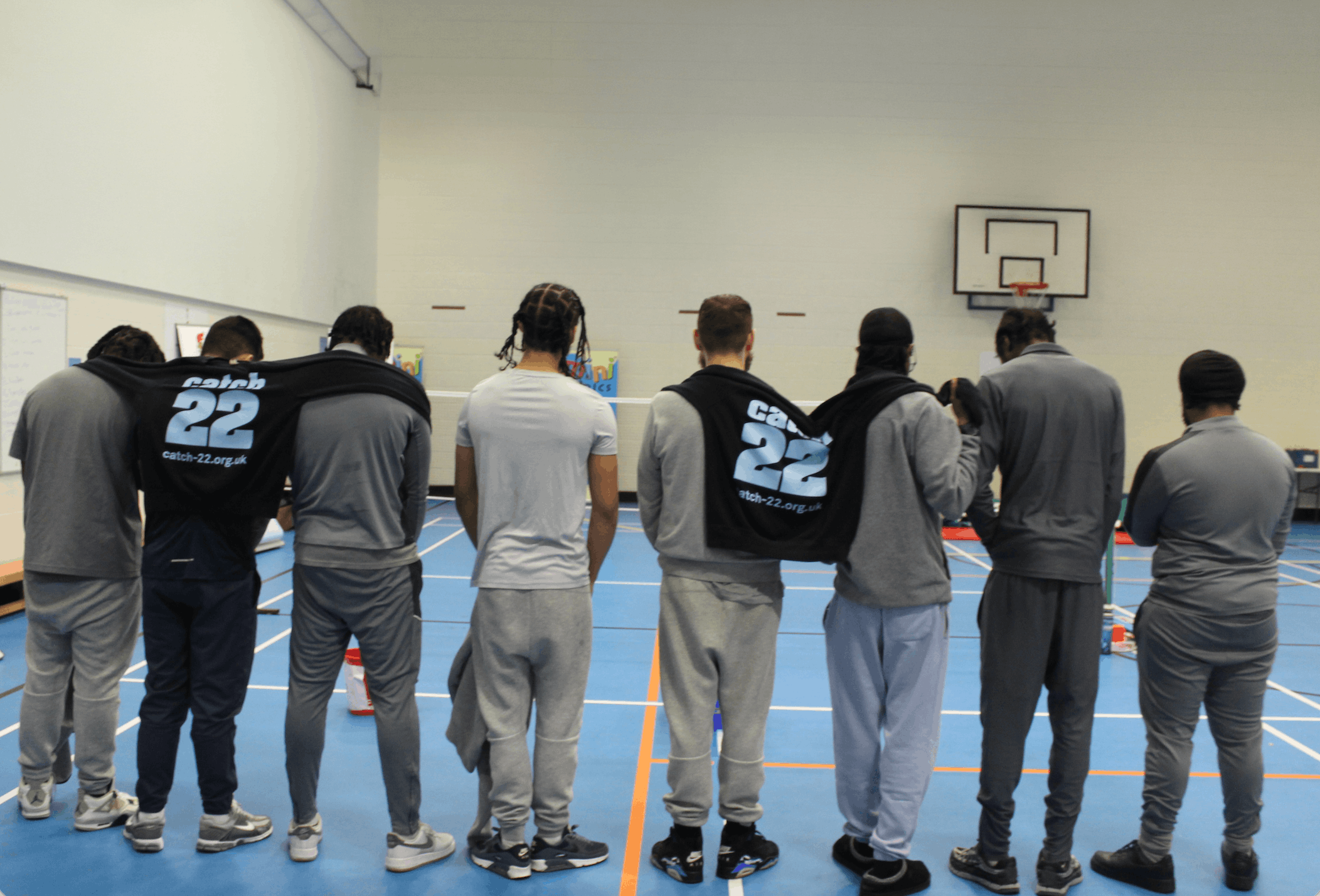
Among the most powerful aspects of the service were the events we organised inside the prisons.
These events brought together service users, prison staff, and, on occasion, family members to recognise the progress individuals had made. They were designed not simply as events, but as goals to work towards. Participation was linked to positive behaviour, creating meaningful incentives while reinforcing personal responsibility.
The events themselves varied to appeal to a wide range of interests. We delivered sports days, music events, celebration days, and showcases for podcasts created by the men themselves, exploring subjects such as gang culture, knife crime, violence, and life after prison.
One particularly memorable event was a prison sports day delivered in partnership with the prison gym department. Prisoners from different wings competed in a range of activities, with the highest-scoring wing earning the opportunity to play a football match against prison staff.
What stood out wasn't the competition itself, but the atmosphere it created which had a lasting impact.
For a few hours, the usual barriers seemed to fade. There was teamwork, encouragement, laughter, and genuine camaraderie between prisoners and staff. One participant later told us that he had forgotten he was in prison for a few hours.
Moments like this matter more than they may initially appear.
They create opportunities for positive social interaction, strengthen relationships amongst peers and staff, and remind people that they can engage differently with those around them.
The celebration days were equally impactful.
Family members were invited into the prison to see the work their loved ones had completed, whether that was behavioural interventions, creative projects, music production, or the creation of a podcast.
I remember watching family members seeing this work for the first time. The pride on their faces was unmistakable. Equally powerful was the pride shown by the men presenting it. For a few hours, they were no longer defined by their offence or their reputation on the wing. They were being recognised for growth, effort, creativity, and achievement.
Many family members thanked us for creating a space that felt different from a traditional prison visit as it was a space where they could spend meaningful time together and celebrate positive change.
These events were sometimes viewed as rewards or "nice extras". In reality, they are powerful rehabilitative interventions.
They provide opportunities for reflection, emotional connection, and accountability. They strengthen family relationships and give people something positive to work towards. The planning process itself often takes months, creating structure, motivation, and a clear incentive for positive engagement.
Importantly, access to these opportunities is earned through positive engagement and conduct. Individuals understand that participation depends on their behaviour and commitment. In this way, purposeful activity becomes directly linked to violence reduction.
When people have something to lose, something to work towards, and people who believe in them, the dynamics begin to change.
Reflecting on his experience of the service, one participant wrote:
"Thank you for everything you have done for us. I hope one day you understand how much you have helped everyone here."
Many of the men participating in these activities had histories connected to serious violence, gang involvement, and knife crime. Yet some of the factors that appeared to support positive change were often not as complicated as we imagined. They were purpose, connection, belonging, and hope.
Reducing violence is not only about responding when harm occurs. It is about creating environments where violence becomes less likely in the first place.
Purpose gives people a reason to engage. It strengthens relationships. It encourages responsibility. It helps individuals see a future beyond custody.
Looking back, I do not believe the success of these events came from the activities themselves. It came from what they represented.
They gave people something to work towards. They strengthened family relationships. They created opportunities for accountability, reflection, and hope.
The evidence from both inspection findings and frontline practice is clear: prisons that prioritise purposeful activity, positive relationships, and opportunities for personal growth are creating conditions that support both rehabilitation and safety.
Ultimately, the most effective violence reduction strategies are often those that help people remember who they are, who they want to become, and what they still have to lose.
That is the power of purpose.
References
HM Chief Inspector of Prisons for England and Wales. (2024). HM Chief Inspector of Prisons for England and Wales Annual Report 2023-24. Crown Copyright 2024.
(Catch 22 have been partnered with Fighting Knife Crime London since 2021)