Buy art at www.brucehoulder.art and support Fighting Knife Crime London








By Chantell Hayles, Founder, Living Without Limits
Knife crime is often spoken about at the point of crisis. When a young person is arrested, when a life is lost, and when communities are left asking how it got this far. The reality is that by the time we are responding at that stage, we are already too late.
The conversation needs to shift. Not to reaction, but to early intervention. Not to punishment alone, but to understanding. Not to statistics, but to the real lives behind them. Because no young person wakes up one day and decides to carry a knife without a story behind it. There is always something underneath. Unmet needs, a lack of belonging, exposure to violence, influence from peers, a search for protection, or simply a need to be seen.
If we are serious about tackling knife crime, we have to become serious about reaching young people before those factors take hold.
Lived Experience
At the age of 16, I was stabbed in the back by another female after school. Swapping coats 20 minutes earlier, was what doctors said saved my life. The thickness of the coat stopped the knife from penetrating my heart. That moment could have been the end of my story. Instead, it became the beginning of a deeper understanding of how young people find themselves in situations that spiral beyond their control. What is important to understand is that my experience did not begin at 16. There were signs before that moment, gaps in support, and experiences that were not fully understood or addressed.
Like many young people, I was navigating things that I did not have the language for at the time. That is why I am so passionate about early intervention. Because when I walk into a school now, I do not just see behaviour. I see what could happen next if no one steps in.
In my work across schools, alternative provisions, and local authorities, one thing is clear. There is a window of opportunity that we are consistently missing. Young people show us when they are struggling, but it does not always come in ways that are easy to understand. It might look like disruption in the classroom, poor attendance, withdrawal, aggression, or silence.
Recognising the moment
These behaviours are often labelled, managed, or sanctioned, but they are rarely explored deeply enough. Instead of asking what is wrong with this young person, we need to ask what has happened to them and what they need now. Early intervention is about recognising that moment and responding to it properly, not waiting until the behaviour escalates into something more serious.
At Living Without Limits, early intervention is not just a concept, it is the foundation of everything we do. Our work is rooted in lived experience and focused on creating spaces where young people feel safe enough to be honest. It is about having real conversations, not rehearsed ones, and challenging thinking while building trust.
How we work
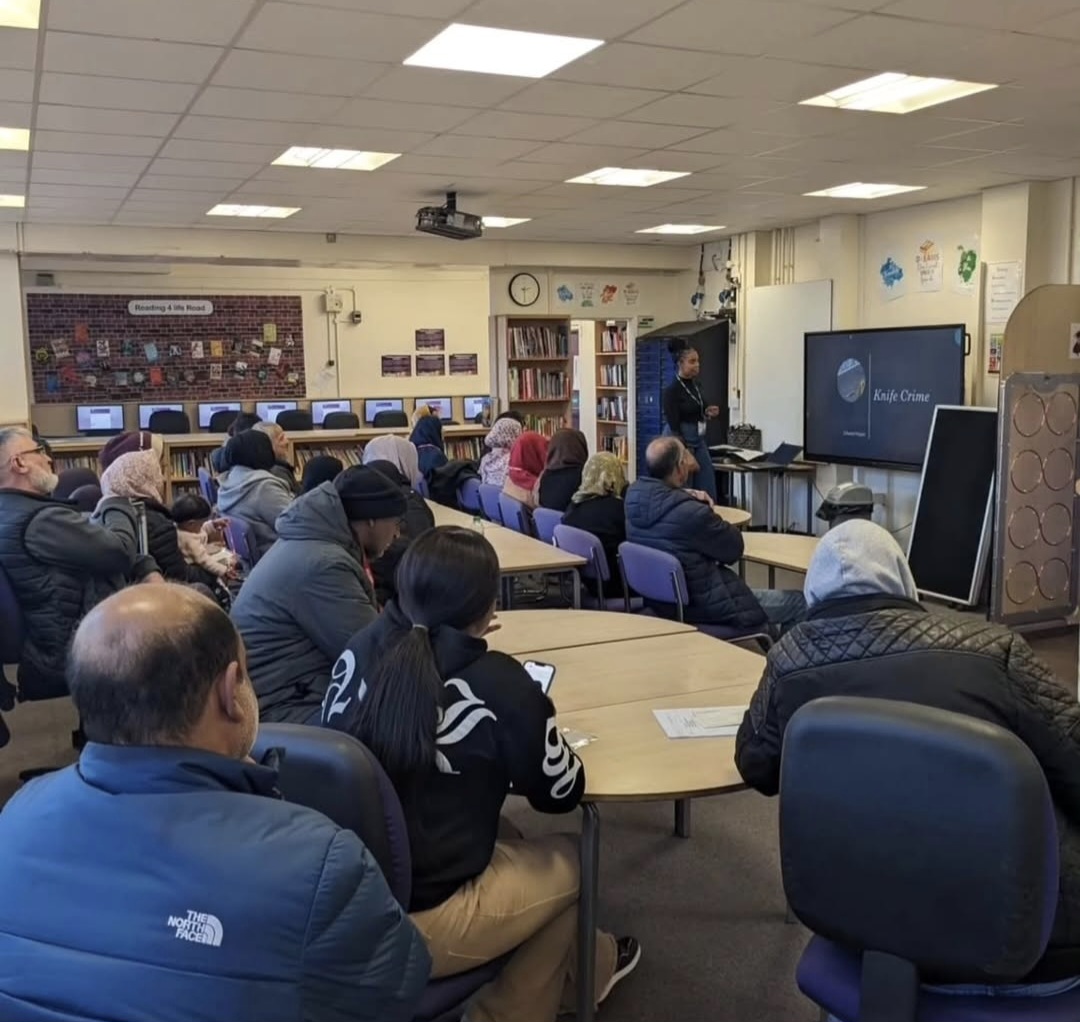
We deliver workshops across the UK on knife crime awareness, exploitation, county lines, violence against women and girls, behaviour, and mental health. These sessions are designed not just to inform, but to engage, challenge, and create space for reflection. Alongside this, we provide one to one mentoring for young people who need more targeted support, allowing us to build trust over time and work through deeper issues.
A key part of our approach is working with parents and carers. Too often, they are left out of the conversation, despite being a critical part of a young person’s environment. Through parent workshops, we support them to understand the risks their children may be facing, recognise the signs of exploitation, and feel more confident in having difficult conversations at home. When schools, young people, and parents are aligned, the impact is far greater.
Our work has also extended into national spaces. I have contributed to discussions linked to the Home Office Safer Streets initiative and was key note speaker at a Serious Youth Violence Conference in Somerset, bringing frontline insight into conversations that shape policy and practice. These spaces matter because they bridge the gap between lived experience and professional understanding. If we want systems to change, they must be informed by reality.
The Reset Programme
One of the ways we are putting early intervention into practice is through The Reset Programme. This is a targeted approach delivered within schools, where different students are selected for each session based on what they need at that moment. It may be students struggling with behaviour, those who are regularly absent, or young people lacking confidence and direction.
The key is that the intervention is timely. Not after things have escalated, but while there is still an opportunity to reach them. Through honest conversations, reflection, and challenge, we begin to address what sits beneath the surface. There are no labels, no assumptions, and no one size fits all approach. We are already seeing change, because when you reach the right young person at the right time, things can turn.
There is a growing recognition that lived experience has a place in this work, but it is not just about telling a story. It is about how that story is used. When I speak to young people about knife crime, I am not speaking from theory. I am speaking from a place they recognise as real. That creates a different level of engagement and allows conversations to go deeper.
For many young people, it is the first time they feel truly understood, and that understanding is often the starting point for change.
Shared Commitment
Tackling knife crime cannot sit with one service alone. It is not just a policing issue, an education issue, or a community issue. It is all of these combined. Schools, families, youth services, police, and community organisations all have a role to play. For that to work, there has to be a shared commitment to early intervention, not as an afterthought, but as a priority.
The work we are doing at Living Without Limits is built on a simple belief. That young people deserve to be reached before they reach crisis. That behaviour is a form of communication, and that with the right support at the right time, change is possible.
Knife crime is a complex issue, but part of the solution is clear. We need to stop waiting, start listening earlier, and act when it still matters. Because every young person we reach in time is a life that does not become another statistic.